♥ Wishlist










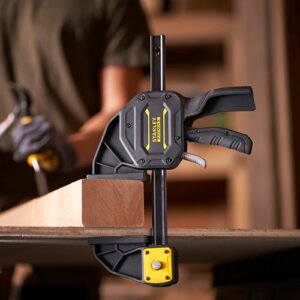
A reliable clamp hand tool helps keep materials firmly positioned while you cut, drill, glue, assemble, weld or make repairs. For Canadian DIY enthusiasts, woodworkers, tradespeople and workshop users, the right clamp can make a project easier to control and improve the consistency of the finished result. This category brings together different styles of hand-operated clamps and related clamping tools so you can compare options based on the job, material size and required holding pressure.
Clamp hand tools are available in many designs, from compact one-hand clamps for quick positioning to heavy-duty bar and parallel clamps for larger assemblies. When shopping, consider the opening capacity, throat depth, clamping force, jaw shape and overall construction. A clamp with the correct capacity can hold a workpiece securely without forcing you to improvise with unsuitable equipment.
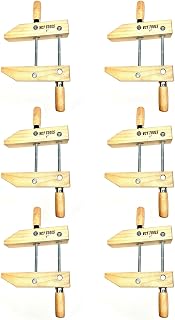
Woodworking clamps are a popular choice for furniture making, cabinet assembly, cutting boards and general wood projects. Handscrew clamps can provide controlled pressure and are useful when working with delicate or irregularly shaped materials. Bar clamps and F-clamps offer longer reach and are commonly used for joining boards, holding assemblies and securing materials during glue-ups.
Parallel clamps are particularly useful when accurate alignment is important. Their broad jaws can help maintain even pressure across panels, tabletops, cabinets and other larger workpieces. Corner clamps and right-angle clamps are designed to help position pieces at consistent angles, making them useful for frames, boxes, cabinetry and other assembly tasks.
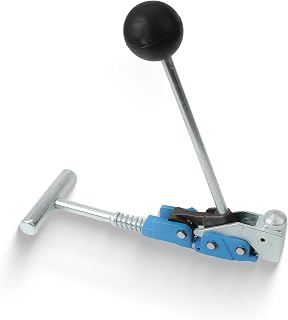
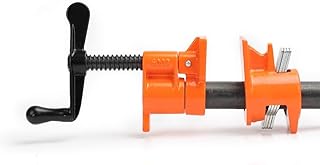
Pipe clamps and pipe-alignment tools are another useful category for workshops and fabrication environments. Depending on the design, they can help position or secure pipes and fittings during installation or fabrication. Specialty clamps can also include toggle clamps, welding clamps, panel clamps, hose-clamp tools and helping-hands fixtures for tasks that require more specialised positioning or access.
Start by checking the maximum jaw opening and throat depth. The opening determines how wide a workpiece the clamp can accommodate, while throat depth indicates how far the clamp can reach across the material. For larger woodworking projects, longer bar or parallel clamps may be more practical. For smaller repairs and craft work, compact trigger clamps may be easier to handle and store.
Clamping pressure is also important. Higher pressure can be beneficial for demanding assembly or fabrication applications, but more force is not always better. Excessive pressure can damage softer materials, so look for a clamp that provides appropriate control. Padded or non-marring jaw faces can be especially useful when working with finished wood, painted surfaces or other materials where marks are a concern.
Construction is another consideration. Steel components can provide durability for demanding workshop use, while lighter materials can make a clamp easier to position repeatedly. Quick-release mechanisms and one-handed operation can improve convenience when you need to hold a workpiece with one hand while adjusting the clamp with the other.
For woodworking, having several clamp styles available can make a workshop much more versatile. A selection of medium-size bar clamps can handle everyday assembly, while longer clamps can accommodate wider panels and furniture components. Corner clamps can help keep joints square, and panel or parallel clamps can provide more even pressure during larger glue-ups.
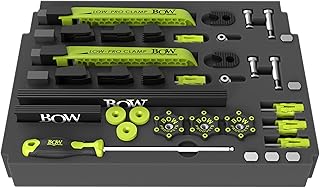
DIY users can benefit from compact quick-grip clamps for temporary positioning, household repairs, crafts and light fabrication. If you frequently work on different project sizes, a mixed clamp set can be a practical option because it provides several capacities without requiring every clamp to be purchased individually.
Canadian shoppers should compare dimensions carefully because clamp specifications may be listed in inches, millimetres or both. Check the stated capacity against the actual material you plan to hold. It is also worth considering storage space, particularly if you work in a compact garage or home workshop. Buying several appropriately sized clamps is often more useful than relying on one oversized model for every task.
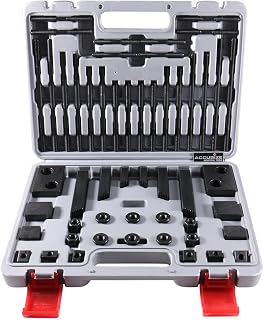
Before choosing a product, review the intended application, jaw configuration, adjustment mechanism and available accessories. For specialist jobs such as pipe alignment, PEX work, welding, soldering or hose-clamp installation, select a tool designed for that specific task rather than using a general-purpose woodworking clamp.
The best clamp hand tool is the one that matches the material, workspace and job at hand. Whether you are assembling furniture, repairing a household item, building a woodworking project or working on a fabrication task, the correct clamp can provide dependable positioning and hands-free support. Explore the available clamp hand tools to compare sizes, designs and applications, and choose equipment that fits the way you work.
Find practical clamp hand tools for holding, aligning, securing and positioning materials during woodworking, repairs, fabrication and DIY projects. Explore a broad selection of bar clamps, handscrew clamps, corner clamps, pipe clamps, parallel clamps and specialty clamping tools suited to Canadian workshops and job sites.